
Most people understand the importance of brushing their teeth twice a day. But how often do you think about cleaning the toothbrush itself?
A recent study highlighted by the American Dental Association found that many individuals have significant gaps in their knowledge regarding toothbrush hygiene. Researchers discovered that improper toothbrush cleaning and storage habits can allow bacteria and other microorganisms to accumulate on toothbrush bristles, potentially increasing the risk of oral reinfection and other health concerns.
Why Toothbrush Hygiene Matters
Your toothbrush comes into contact with bacteria every time you brush. While many of these bacteria naturally exist in the mouth, studies have shown that toothbrushes can also become contaminated by environmental sources, including bathroom surfaces, moisture, and improper storage conditions.
Researchers found that many people either do not clean their toothbrushes adequately or store them in ways that encourage bacterial growth. The study suggests that poor toothbrush hygiene may contribute to reinfection of oral bacteria and potentially expose individuals to additional microorganisms.
Common Toothbrush Mistakes
1. Storing a Wet Toothbrush in a Closed Container
Many people place a wet toothbrush into a travel case or cover immediately after use. While this may seem sanitary, it can actually trap moisture and create an environment where bacteria thrive.
Allowing your toothbrush to air dry between uses is generally recommended.
2. Keeping Toothbrushes Too Close Together
When multiple toothbrushes touch each other in a shared holder, bacteria can transfer from one brush to another. Each toothbrush should have enough space to dry independently.
3. Not Replacing Your Toothbrush Regularly
The American Dental Association recommends replacing your toothbrush approximately every three to four months, or sooner if the bristles become frayed. Worn bristles are less effective at cleaning teeth and may harbor additional bacteria.
4. Storing Your Toothbrush Near the Toilet
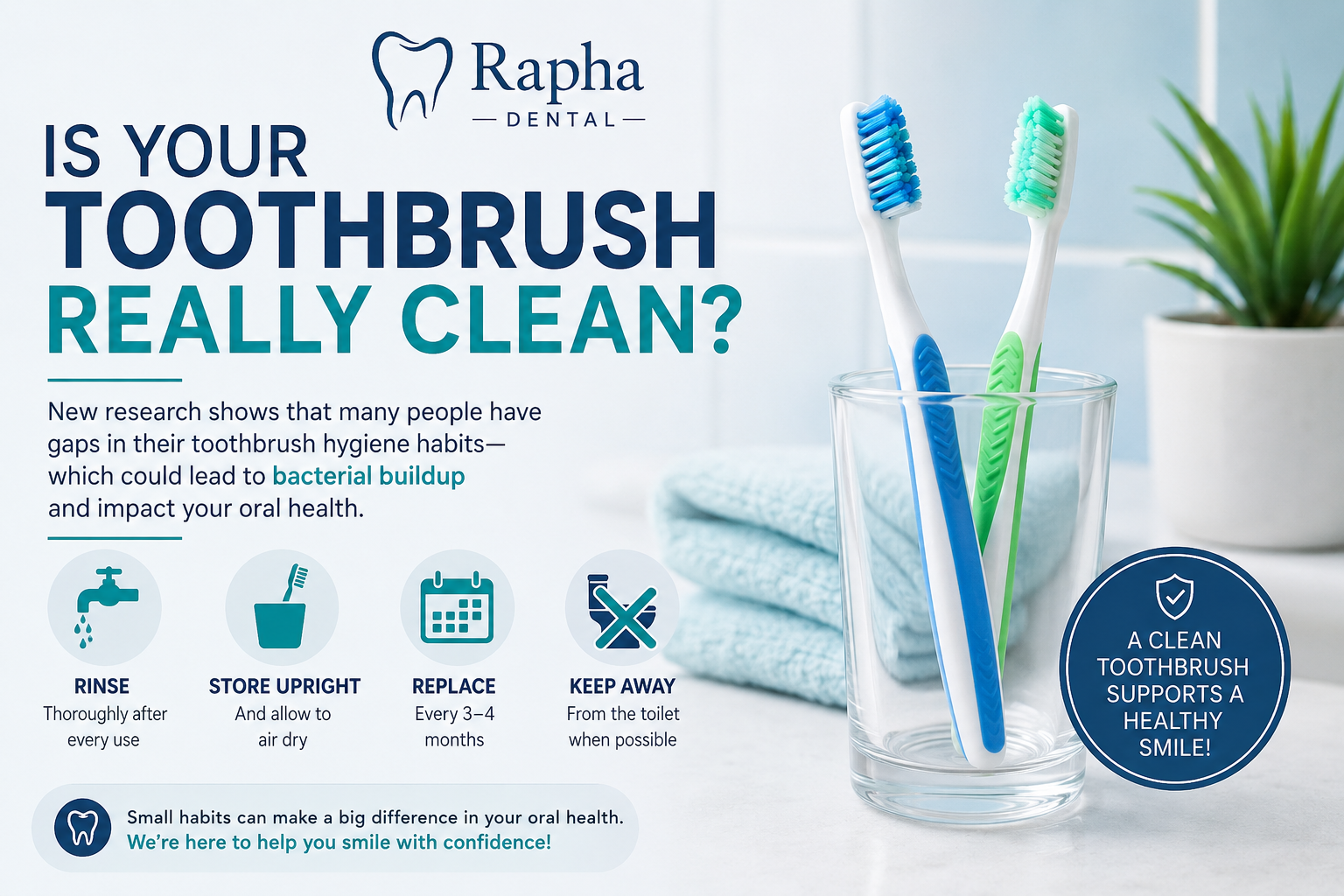
Research has shown that bathroom environments can contribute to toothbrush contamination. While flushing with the toilet lid closed may reduce airborne particles, storing toothbrushes as far from the toilet as practical is a good habit.
How to Properly Clean Your Toothbrush
Fortunately, maintaining a clean toothbrush is simple:
- Rinse your toothbrush thoroughly with tap water after every use.
- Remove any remaining toothpaste or debris from the bristles.
- Store the toothbrush upright whenever possible.
- Allow it to air dry completely between uses.
- Avoid sharing toothbrushes.
- Replace the toothbrush every three to four months or after recovering from an illness.
Some studies have also investigated disinfecting toothbrushes with antimicrobial solutions such as chlorhexidine, although routine rinsing and proper storage remain the most important steps for most people.
What About Electric Toothbrush Heads?
Electric toothbrush heads require the same care as manual toothbrushes. Rinse them thoroughly after use, allow them to air dry, and replace them according to the manufacturer’s recommendations or when the bristles show signs of wear.
The Bottom Line
Brushing twice a day is essential, but your toothbrush also needs proper care. Recent research suggests that many people overlook simple toothbrush hygiene practices that can help reduce bacterial contamination and support better oral health.
If you have questions about the best toothbrush for your needs or want personalized oral hygiene recommendations, the team at Rapha Dental is here to help. During your next dental visit, ask us about the most effective brushing techniques and home care habits for maintaining a healthy smile.